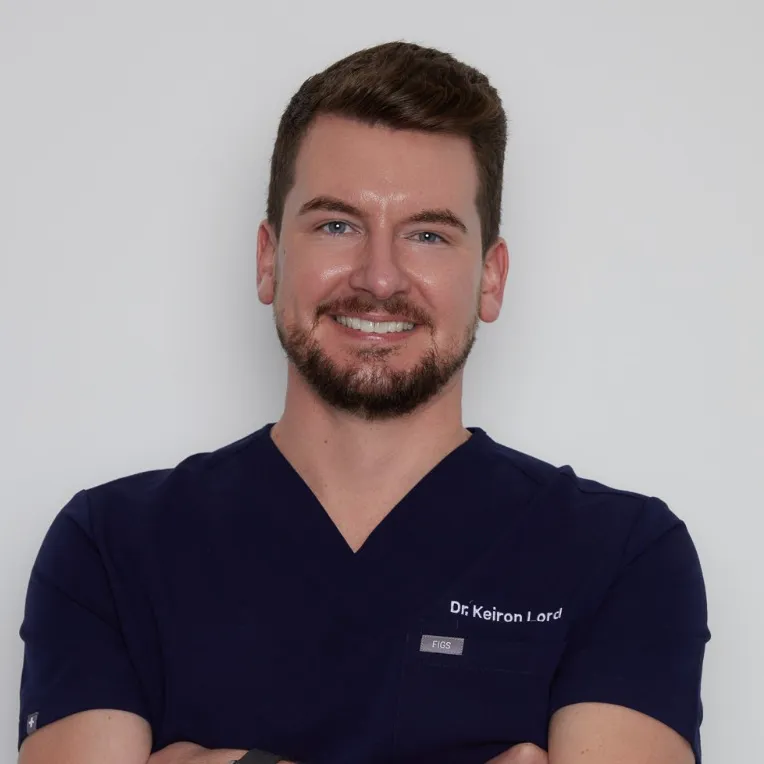
Dr Keiron Lord is a regenerative aesthetics and longevity doctor, founder of Dr Lord Group and clinical assistant professor. With a background as an NHS surgeon and an Undergraduate degrees in biochemistry and biomedical science, he specialises in evidence-based, preventative skin ageing solutions integrating regenerative and longevity-focused approaches. Qual: BMBS BSc (Hons), PGDip.
Skin laxity and dehydration are among the most common age-related aesthetic concerns encountered in clinical practice.
Other frequently reported concerns include fine lines and wrinkles, uneven pigmentation, enlarged pores, dullness, loss of facial volume and textural irregularities. These manifestations not only reflect intrinsic ageing but are also amplified by extrinsic factors such as ultraviolet (UV) exposure, pollution and lifestyle.
These conditions significantly affect skin texture, radiance and perceived age, often manifesting as dullness, fine lines, loss of elasticity and a general decline in skin quality. While traditionally associated with middle-aged and older adults, early-onset skin laxity is increasingly reported among younger individuals, particularly those exposed to environmental stressors, photodamage or poor lifestyle habits. From the patient’s perspective, these signs of skin ageing often contribute to self-perceived loss of vitality, confidence and wellbeing, which are key motivators for seeking aesthetic intervention.
This article explores the science behind regenerative treatments for skin laxity and dehydration, outlining how emerging approaches can enhance outcomes and address the underlying biological causes of skin ageing.
Causes and pathophysiology of ageing skin
Skin ageing is a multifactorial process driven by intrinsic and extrinsic mechanisms. Intrinsic ageing is largely genetically programmed and characterised by hormonal shifts, metabolic decline and reduced cellular turnover. Extrinsic ageing, on the other hand, is caused by environmental and behavioural stressors such as UV radiation, pollution, poor nutrition, alcohol and smoking. These influences accelerate the breakdown of collagen and elastin, impair fibroblast function, and increase the formation of reactive oxygen species (ROS), leading to oxidative stress and mitochondrial dysfunction. As a result, the skin becomes thinner, drier and less elastic, with impaired barrier function and increased transepidermal water loss (TEWL).
Current treatment options and limitations
Several non-surgical interventions are available for managing skin laxity and dehydration. These include:
Topical cosmeceuticals
Topical agents are commonly used as a first-line intervention to manage early signs of ageing. These include moisturisers, antioxidants (e.g. vitamins C and E), retinoids and peptides. Moisturisers enhance hydration and improve skin barrier function, while retinoids stimulate epidermal turnover and collagen production, contributing to improved skin texture and firmness. Antioxidants neutralise free radicals and reduce oxidative stress, helping to protect against photodamage. Despite their benefits, topicals often suffer from limited penetration into deeper skin layers, which restricts their efficacy in addressing moderate to severe skin laxity and dehydration.
Microneedling
Microneedling is a minimally invasive procedure that uses fine needles to create controlled dermal injury, stimulating a wound healing response and collagen induction. It improves skin texture and elasticity and can enhance the penetration of topically applied bioactives. It is often used in both preventative and corrective aesthetic protocols, especially in younger patients or in combination with other modalities.
Energy-based devices
Radiofrequency (RF), high-intensity focused ultrasound (HIFU) and fractional lasers are examples of energy-based devices used to tighten the skin and remodel collagen. These treatments apply thermal or mechanical energy to the dermis, triggering fibroblast activity and extracellular matrix (ECM) remodelling. RF and ultrasound deliver heat to deeper layers of the skin, improving firmness and elasticity, while lasers resurface the epidermis and promote collagen neosynthesis. However, these devices may not significantly restore hydration or reverse oxidative damage.
Injectable treatments
Injectables are widely used to address facial ageing through volumisation, hydration and biostimulation. Hyaluronic acid (HA) fillers are primarily used to restore lost volume and structural support by binding water and integrating into the ECM.1 Alongside these, HA-based skin boosters, sometimes referred to as non-volumising dermal hydrators, have become a mainstay in aesthetic practice for improving skin hydration, texture and elasticity without altering facial contours. They are often administered via microinjections into the superficial to mid-dermis, and are especially useful for treating delicate areas such as the periorbital, perioral and neck regions.
These traditional skin boosters rely on the hydrophilic nature of HA to increase water content in the skin, thereby improving turgor and reducing fine lines. Repeated treatments over time have been shown to support dermal architecture by increasing collagen density and improving fibroblast activity. Biostimulatory injectables such as poly-L-lactic acid (PLLA) and calcium hydroxylapatite (CaHA) offer a different mechanism by stimulating neocollagenesis and dermal thickening over time. These agents trigger a controlled inflammatory response that activates fibroblasts and remodels the ECM, producing gradual, natural-looking improvements in skin texture and firmness. These injectables are frequently selected based on the patient’s individual ageing profile, skin quality and aesthetic goals.
They are also commonly used in combination protocols with energy-based devices or cosmeceuticals to enhance global skin rejuvenation outcomes. While each category offers unique benefits, hydration, collagen stimulation or skin tightening, limitations persist. Topicals often have poor dermal penetration and require prolonged use. Energy-based devices can induce collagen remodelling but may not fully restore hydration or target deep dermal structures. Dermal fillers and skin boosters improve plumpness, but typically act through mechanical or volumising effects, lacking broader regenerative or antioxidant action.1 Biostimulatory injectables, such as PLLA and CaHA, offer longer-lasting collagen stimulation but have come under scrutiny due to potential complications during subsequent facial surgery. These agents may leave behind granulomas or stimulate fibrotic responses that can obscure anatomical planes and complicate surgical dissection, particularly in facelift procedures or reconstructive surgery. Consequently, some plastic surgeons advise caution or recommend a washout period before surgical interventions.
Emerging treatments
Recent advances in regenerative aesthetics have led to the development of skin boosters that go beyond hydration and volume restoration by actively engaging biological repair pathways. These next-generation skin boosters integrate dual-weight HA with longevity-focused bioactives such as nicotinamide adenine dinucleotide (NAD+), resveratrol, mannitol and biomimetic peptides, targeting the root mechanisms of skin ageing.
Central to this innovation is the activation of Sirtuin 1 (SIRT1), a cellular regulator associated with mitochondrial function, genomic stability and oxidative stress modulation. NAD+ is a vital coenzyme in energy metabolism and DNA repair, while resveratrol acts as a polyphenolic SIRT1 activator with established antioxidant and anti-inflammatory properties. Mannitol, a sugar alcohol, stabilises HA and scavenges ROS, contributing to improved injection comfort and product longevity. Biomimetic peptides, modelled after endogenous signalling molecules, promote fibroblast activation and collagen synthesis, particularly types I and III, essential for dermal structure and elasticity.
There are several formulations that can achieve this. One formulation that exemplifies this multi-targeted approach is Longevha (Caromed), a regenerative injectable that integrates dual molecular weight HA for deep and superficial hydration with NAD+ and resveratrol to activate SIRT1. Longevha may be administered via microneedling or (off-label) via intradermal injection, allowing for adaptable treatment protocols tailored to patient age, degree of laxity and depth of correction.
Several other emerging formulations align mechanistically or compositionally with Longevha but differ in delivery route, clinical maturity or regulatory status. For example, the StyleFox NAD+ or Resveratrol Antioxidant Skin Booster is a topical product that combines NAD+, resveratrol, HA and peptides, mirroring Longevha’s key bioactive ingredients.20 However, as a topical formulation, its depth of penetration and ability to influence dermal fibroblast activity is inherently limited by epidermal barrier constraints. Moreover, topical delivery of NAD+ remains technically challenging due to molecular instability and limited skin absorption, reducing its potential to sustain biological activity in vivo.
In a compelling in vitro study, Kang et al. investigated exogenous NAD+ supplementation in human fibroblasts, augmented by quercetin and enoxolone to inhibit CD38 and thus sustain intracellular NAD+ levels. The authors observed that the NAD+ boost improved sirtuin activation, mitochondrial function, and autophagy; additionally, it mitigated UV‐induced senescence and oxidative damage. These results lend mechanistic support to the concept that NAD+ (or NAD+‐enhancing formulations) can positively influence cellular resilience in ageing skin, offering biological rationale for their incorporation into skin booster strategies.
Clinical considerations and integration into practice
In a prospective randomised trial (N=20), patients receiving a SIRT1-activating skin booster formulation reported measurable improvements in hydration, elasticity and overall skin quality, with the greatest effects observed following intradermal injection.23 This delivery route offers greater precision by enabling clinicians to control the exact depth, volume and anatomical placement of actives within the dermis. Compared to microneedling, which relies on passive diffusion through microchannels, injection allows for direct deposition into the superficial or mid-dermis, where fibroblasts, vasculature and ECM activity are most concentrated. This contributes
to enhanced bioavailability and potentially longer-lasting results.
Patient selection is critical to ensuring safety and efficacy. Ideal candidates include individuals with early to moderate signs of skin ageing, particularly those with dehydration, fine lines or early skin laxity, who seek biologically active treatments rather than volumisation alone. Patients with realistic expectations, intact barrier function and a commitment to maintenance protocols are most likely to benefit. Contraindications include active skin infections or inflammation, recent isotretinoin use, autoimmune disease, known hypersensitivity to HA or formulation components and a history of hypertrophic scarring or keloids.
Pre-treatment preparation includes detailed medical history, skin assessment and discontinuation of retinoids or harsh actives approximately three to seven days prior. Gentle cleansing and topical anaesthetic or cooling measures may be used to improve comfort.
Technique typically involves a microdroplet injection pattern using a fine needle or microcannula, targeting the superficial to mid-dermis depending on skin thickness and treatment area. Most protocols recommend an initial course of two to three sessions spaced three to four weeks apart, with maintenance treatments every six to 12 months, a regimen in line with other skin booster approaches.
Downtime is minimal, with common post-procedural effects including mild erythema, swelling or bruising resolving within 24-72 hours. Rare adverse events include nodule formation, hypersensitivity or vascular compromise, mitigated by proper injection technique, anatomical knowledge and adherence to aseptic protocols.
Aftercare includes avoiding intense heat, exercise and active skincare for 24-48 hours, along with elevation and gentle skin handling to optimise outcomes. Patients should be informed of signs of potential complications and provided with follow-up contact details.
When used as part of a multimodality plan, SIRT1-activating boosters can serve as a foundation for improved dermal health, hydration and mitochondrial function. Their regenerative effects may enhance outcomes when layered with complementary treatments such as RF microneedling, platelet-rich plasma (PRP) or polynucleotides. Thoughtful sequencing, for example, priming with a skin booster before introducing collagen-stimulating modalities, may yield synergistic clinical benefits while supporting long-term tissue quality.
Regeneration in aesthetics
Skin laxity and dehydration remain core concerns in medical aesthetics, with increasing patient demand for regenerative, long-term solutions over superficial correction. The introduction of skin boosters formulated with SIRT1 activators, including NAD+ and resveratrol, represents a promising advancement in aesthetic dermatology.
As medical aesthetics continues its shift toward outcomes rooted in health span and tissue integrity, SIRT1 activation offers a scientifically grounded, biologically intelligent strategy for skin rejuvenation.