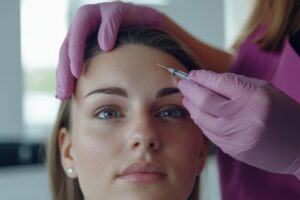

Cellular fatigue occurs when skin cells lack the energy and resources to function, repair, and renew efficiently. Declining NAD+ levels are a key driver. LongevHA is formulated to address the root cause by delivering NAD+ directly into the skin, supporting cellular vitality where topical products cannot reach.
Some skin concerns are easy to identify. Volume loss, deep wrinkles, hyperpigmentation, these have visible, well-defined causes and well-established treatments. But there’s another type of skin concern that’s harder to name and harder to address: the skin that simply looks exhausted.
Not dehydrated. Not aged. Just… flat. Unresilient. Slow to bounce back.
What does cellular fatigue actually mean?
Cellular fatigue is a term used to describe a state in which skin cells are no longer functioning at their full capacity. Energy production slows. DNA repair becomes less efficient. Collagen synthesis declines. Cell turnover, the process by which new, fresh cells replace older ones, becomes sluggish.
The result is skin that has lost its responsiveness. It doesn’t recover as quickly from stress, sun, or illness. It looks dull regardless of how much water you drink or how well you sleep. Surface skincare helps temporarily but doesn’t seem to fundamentally change anything.
What causes cellular fatigue in the skin?
The primary molecular driver is a decline in NAD+ (Nicotinamide Adenine Dinucleotide). NAD+ is a coenzyme present in every cell, critical to the metabolic reactions that generate cellular energy. NAD+ also activates sirtuin proteins, particularly Sirt1, which regulate a wide range of cellular maintenance processes, including DNA repair and inflammatory response.
NAD+ levels decline naturally with age. By the mid-30s to 40s, levels in skin tissue may be substantially lower than in younger years. Without sufficient NAD+, sirtuin activity falls, cells become energetically depleted, and the cascade of effects associated with cellular fatigue begins.
How is cellular fatigue different from standard skin aging?
Standard aging is largely structural: collagen fibers break down, fat pads shift, and skin loses volume and elasticity. Cellular fatigue is functional. It doesn’t necessarily show as deep lines or sagging, it shows as a loss of vitality, glow, and resilience.
A 35-year-old can experience cellular fatigue. So can a 55-year-old who has avoided structural aging but whose skin still looks depleted. The two conditions often coexist, but they require different solutions.
How does LongevHA address cellular fatigue?
LongevHA delivers NAD+ directly into the dermis via injection, providing the coenzyme to skin cells in a form they can use immediately. This injectable delivery bypasses the absorption limitations of topical NAD+ products and delivers a more targeted, localized effect than oral supplementation.
The Resveratrol in LongevHA further supports sirtuin activation, working in parallel with NAD+ to help support the cellular processes associated with skin renewal. Peptides in the formula signal collagen production, while dual-weight HA provides structural hydration throughout the dermis.
Together, LongevHA’s Big 5 formula is designed to target cellular fatigue at its source, supporting skin that looks genuinely healthier, not just temporarily plumped.
Want to experience the NAD+ difference? Ask your local aesthetics provider for LongevHA at your next consultation, or visit our Find a Provider page to find a trained practitioner near you.
Frequently Asked Questions
What are the signs of cellular fatigue in skin?
Signs of cellular fatigue include persistent dullness that doesn’t resolve with hydration, slow skin recovery after stress or illness, uneven skin tone, a flat or lackluster complexion, and fine surface lines unrelated to volume loss.
Is cellular fatigue the same as skin aging?
No. Standard skin aging involves structural changes like collagen loss and volume depletion. Cellular fatigue is a functional decline, skin cells lose the energy and repair capacity needed to renew and maintain themselves efficiently.
How does NAD+ depletion cause skin to look dull?
NAD+ is essential to cellular energy production and the activation of sirtuin proteins that regulate skin cell renewal and repair. When NAD+ levels fall, cells become less efficient, leading to slower turnover, reduced collagen synthesis, and the dull, flat appearance associated with cellular fatigue.
Can lifestyle changes reverse cellular fatigue in skin?
Lifestyle factors such as sleep, nutrition, and stress management can support NAD+ levels to some extent. However, the natural decline of NAD+ with age creates a gap that lifestyle changes alone may not fully address. Injectable treatments like LongevHA are designed to support cellular vitality more directly.